

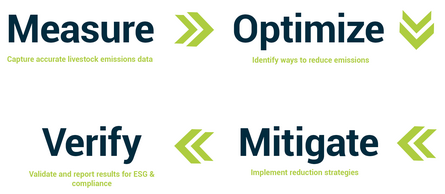
Emissions Mitigation & Validation for Livestock Supply Chains
Turn Methane Strategy Into Measurable Results
Corporations across livestock production and supply chains are under increasing pressure to reduce enteric methane emissions. Meeting climate commitments requires more than estimates, it requires accurate measurement, validated reductions, and defensible reporting.
Our precision measurement systems provide the data needed to design, validate, and scale methane mitigation strategies with confidence.
Crafting Your Strategy
GreenFeed as a Methane Baseline and Monitoring Tool
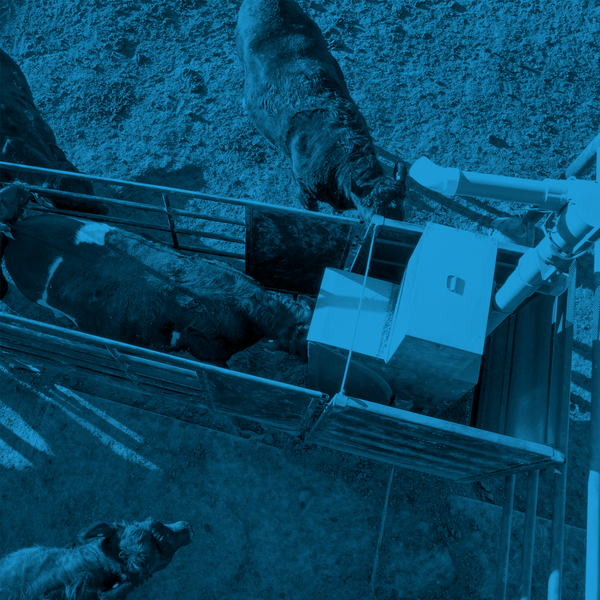
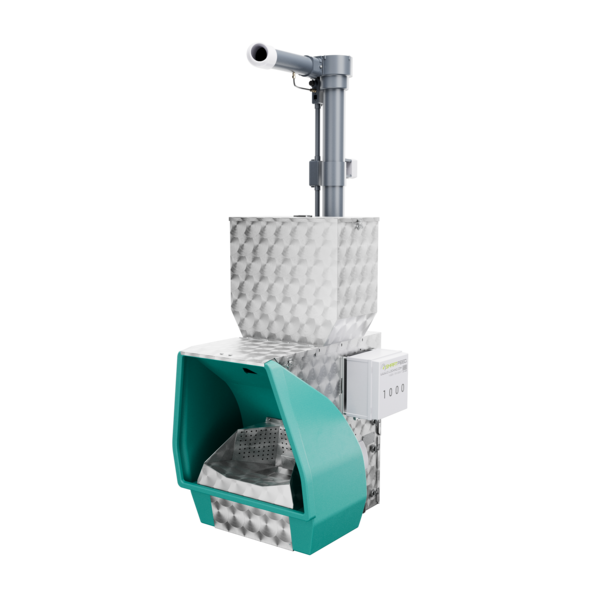
- GreenFeed provides individual animal-level CH₄, CO₂, O₂ and H₂ flux data in grams/day. We measure what's coming from the cow, not what's simply in the air.
- This high-resolution measurement allows companies to:
- Establish accurate methane baselines.
- Evaluate mitigation efficacy of feed additives (e.g., 3-NOP, seaweed, nitrate).
- Monitor changes across production systems, breeds, or feeding regimens.
Link Emissions to Productivity
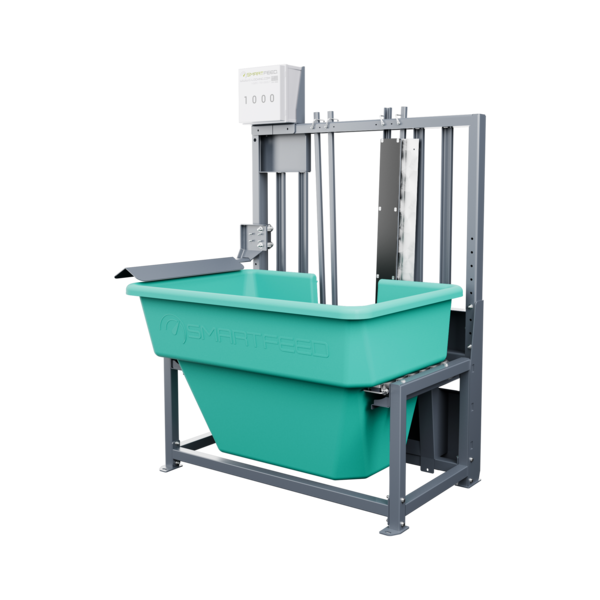
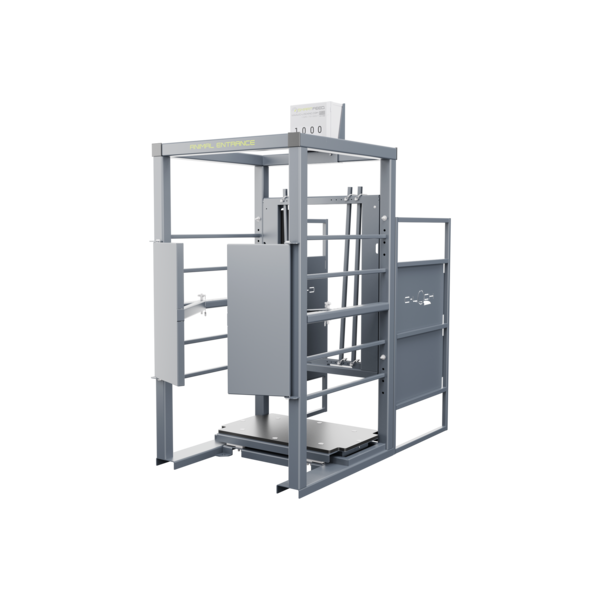
Integration with SmartFeed and SmartScale
- Links emissions to feed intake (SmartFeed) and weight gain (SmartScale) for feed-to-emission ratio optimization.
- Enables multi-variable modeling of efficiency and emissions per unit of product (e.g., kg CH₄ per kg beef or milk).

Validate Reductions & Unlock Carbon Value
GreenFeed is recognized under Verra’s VM0041 methodology for enteric methane projects and aligned with USDA, FAO, and IPCC Tier 3 frameworks.
For corporations, this means emissions reductions are:
- Scientifically robust
- Audit-ready
- Eligible for carbon credit quantification
- Suitable for ESG and Scope 3 reporting
Direct measurement strengthens credibility with investors, regulators, and carbon markets.
Scale Across Operations & Supply Chains
Field Deployable and Scalable
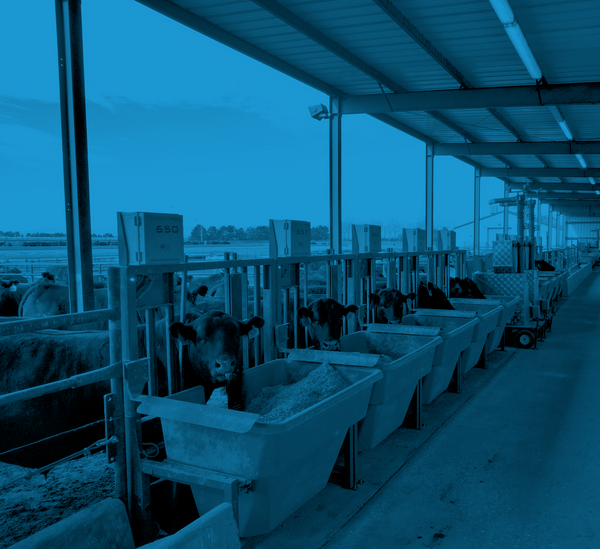
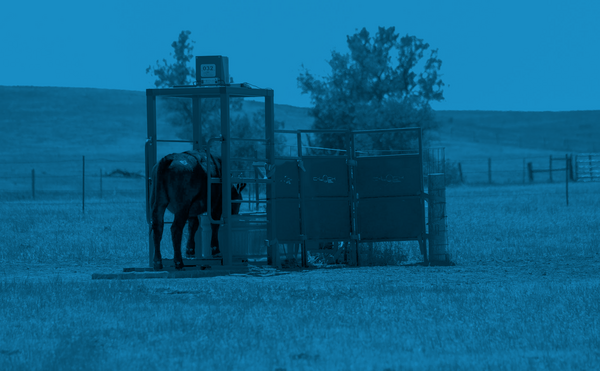
- GreenFeed systems are mobile, solar-compatible, and usable in both feedlots and grazing environments.
- Supports region-specific strategy testing, helping corporations:
- Pilot mitigation strategies in diverse geographies.
- Tailor solutions by species, production system, or feed type.
Aggregation Across Supply Chains
- GreenFeed data can be used to:
- Compare emissions across suppliers, ranches, or regions.
- Incentivize producers via GHG performance metrics.
- Aggregate verified reductions into Scope 3 emissions improvements for ESG reports.
Demonstrates Mitigation Impact to Stakeholders
Scientific Validation and Transparency
Provides defensible emissions data for undeniable results via C-Lock’s multi-layer data accuracy and quality program.
- Methane reductions measured by GreenFeed are:
- Scientifically robust (r ≈ 0.96 correlation to respiration chambers per FAO).
- Transparent and auditable under IPCC Tier 3 methodologies.
- Enables corporations to confidently claim:
- “X% methane reduction” from feed additives or management changes.
- “Y tons of CO₂e avoided” for carbon offset reporting.
ESG and Investor Communication
- Validated GHG reduction data feeds directly into:
- Sustainability reports
- CDP/GRI/TCFD disclosures
- Investor ESG metrics
Impact from Data Collection to Financial Gain
With precise methane measurement and validated reporting, corporations can:
- Invest in proven mitigation strategies
- Quantify cost per ton of CO₂e reduced
- Strengthen ESG performance
- Reduce risk and improve long-term profitability
Accurate measurement turns methane reduction from a compliance obligation into a measurable business advantage and profit generator.